
24-02-2026 Résumé des tables rondes
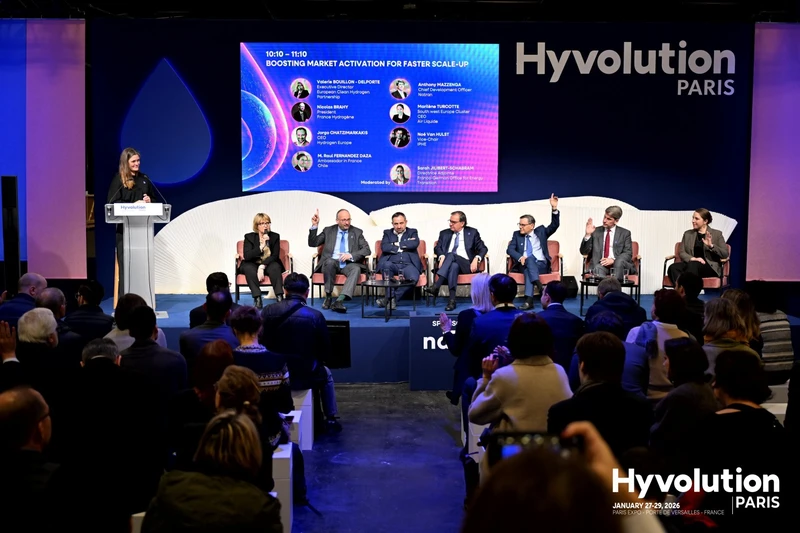
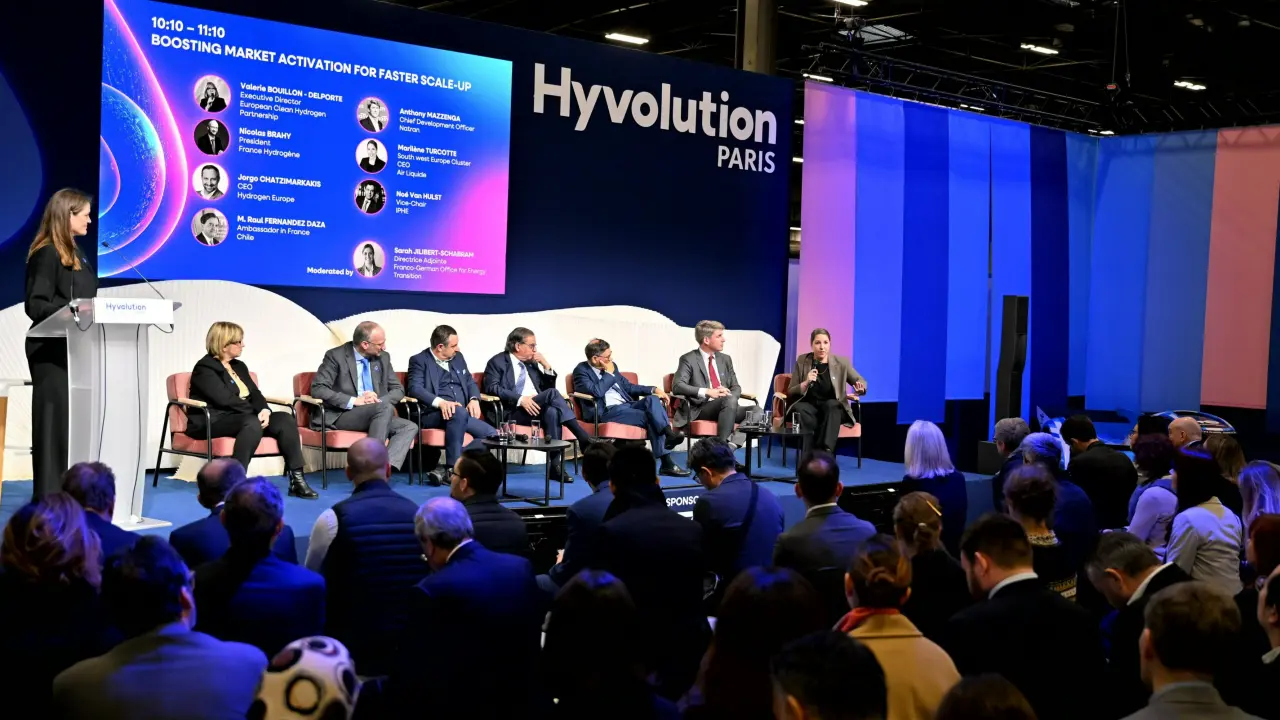
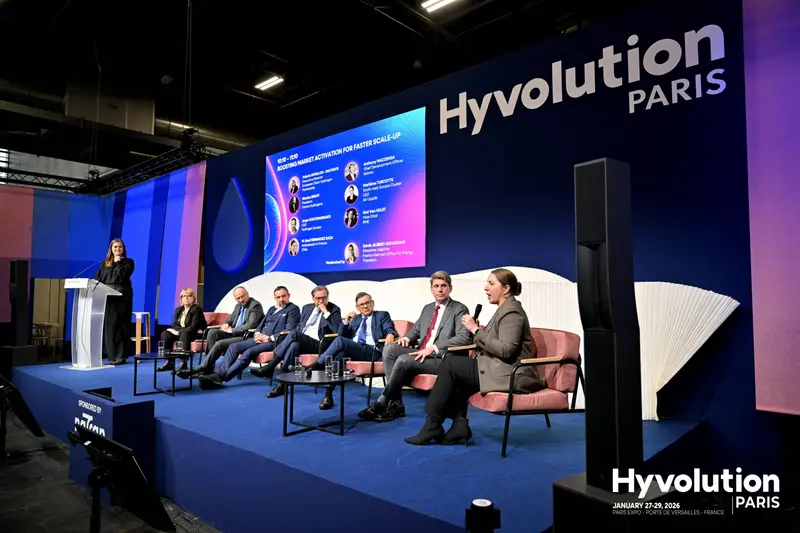
Ministerial opening dialogue: boosting market activation for faster scale-up
Here is a concise summary of the Ministerial Opening Dialogue presented during Hyvolution Paris 2026.
Structure de la page
Éditeur de texte
Context and Challenges
- Despite strong momentum and ambitious hydrogen strategies, the key challenge for 2026 is market activation.
- The discussion focuses on what is still missing to convert projects into Final Investment Decisions (FIDs) and to deploy operational hydrogen value chains, in Europe and in comparison, with other regions worldwide.
Perspective
Hydrogen has entered a “delivery phase”: the priority is no longer vision-setting, but securing demand, stabilising rules and de-risking infrastructure to enable real project execution.
Éditeur de texte
Main messages
1- Europe has ambition and the ecosystem is in place, however it must now turn strategies into industrial delivery and move faster
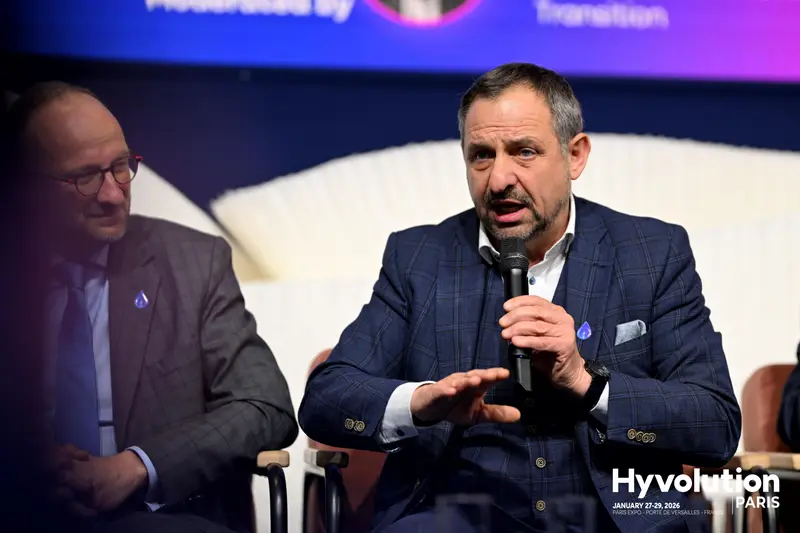
- Noé van Hulst draws a sharp contrast: Europe excels at strategies and regulatory frameworks, but lags on implementation speed, while Asia (mostly China and India) is moving fast thanks to a stronger combination of energy security, industrial policy and climate objectives, and tighter public-private coordination.
- Valérie Bouillon-Delporte nuances this view: Europe has a competitive edge in research and innovation and value-chain structuring, but competitiveness is not guaranteed. Accelerating the transition from innovation to industrial scale-up (hydrogen valleys, SMEs, manufacturing capacity) is critical.
2- Europe must rely on lead markets rather than demand pushed by regulatory obligations
- Jorgo Chatzimarkakis strongly advocates a market driven approach: less regulatory perfection, more action. He calls for the creation of lead markets, such as refining obligations under RED III legislation, to unlock volumes and investments, even if this requires temporary cost-gap support.
- Nicolas Brahy highlights a shared sentiment across the ecosystem: strong alignment on ambition, but frustration about the pace, and a need for pragmatic tools that deliver projects.
3- Infrastructure is progressing, but investment will only follow if risks and operating economics are stabilised
- Anthony Mazzenga brings a very operational perspective: projects like mosaHYc are advancing, and European backbone corridors are progressing. However, no FID will be taken without capacity booking commitments from market players. Anthony Mazzenga stresses the need for risk-sharing mechanisms, especially for large-scale, cross-border infrastructure that will be under-utilised in its early years.
- Marilène Turcotte complements this from an industrial standpoint: the main barriers are now economic, not technological. High energy costs, regulatory instability, and the lack of OPEX support mechanisms continue to delay
Key takeaways
- To scale hydrogen, three levers must align: demand creation, regulatory stability, and the de-risking of infrastructure and OPEX.
- Delivery will determine Europe’s competitiveness: Europe has strong assets, but it must strengthen its delivery and mindset and tighten public-private coordination.
- Global competition and momentum require moving from project announcements to FIDs.








Éditeur de texte
Analytical synthesis courtesy of SIA Partners.