

Hyvolution World Interview
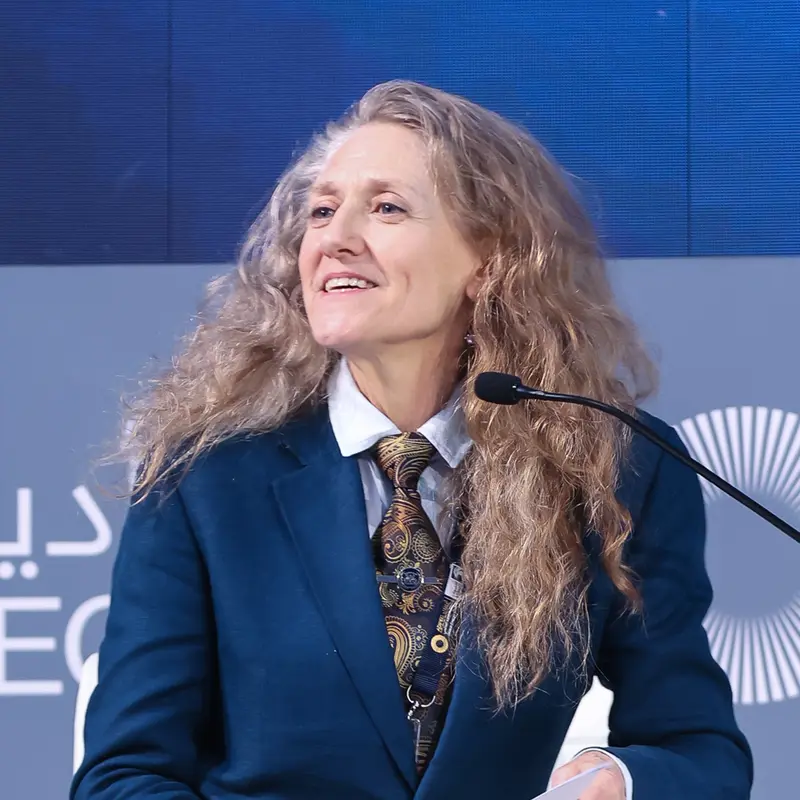
Madadh MacLaine, Secretary-General
Zero Emissions Ship Technology Association (ZESTAs)
Co-founder, Global Liquid Hydrogen Alliance
1. What made you create the Global Liquid Hydrogen Alliance now, and what gap do you want it to address in the global hydrogen value chain?
There are three main reasons why we launched the Global Liquid Hydrogen Alliance now, the first being energy security. This has been on everyone's agenda since the 2026 disruption of Gulf energy flows causing fossil fuel prices to skyrocket.
Another key factor is the International Maritime Organization’s upcoming vote on the Net Zero Framework. Many IMO delegates are unaware of the availability of hydrogen and of its potential as a maritime fuel. We wanted to communicate that via a common voice within the Zero Emissions Ship Technology Association (ZESTAs) and ZESTAs' consultative status at the IMO allows us to bring this information directly into the deliberations.
The gap we are trying to address is not only advocacy for pure hydrogen, but coordination across the whole LH₂ value chain: renewable production, liquefaction, storage, transport, ports, vessels, safety, standards and end users. GLHA brings those actors into one place.
Our goal is to address the problem of bankable demand. Hydrogen production will not scale without credible offtake, while shipowners will not invest without fuel availability. GLHA can help connect supply and demand and break that deadlock.
The third reason, and by no means less important than the others, is the argument for pure hydrogen versus derivatives. Recent studies show that the most energy efficient and therefore most economical vector for hydrogen is indeed pure hydrogen, especially if you're going to be using the hydrogen as hydrogen. There are other associations that are specifically representing the derivatives, but there was no voice for pure hydrogen. All of the other hydrogen associations are pushing derivatives and rarely, if ever, mention pure hydrogen, so we decided that it was time for a voice that spoke for the cleanest element in its purest form.
There is also a wider role for liquid hydrogen beyond shipping. It is not only a marine fuel, but an energy transport vector, allowing renewable energy produced in one region to be moved in hydrogen form to another. That gives liquid hydrogen a role in international energy trade as well as maritime decarbonisation.
2. Liquid hydrogen is increasingly being discussed as a potential solution for zero-emission shipping. What needs to happen for LH2 to move from promising projects to a commercially viable global market?
With recent advancements in technology across the sector we're looking at the possibility of green hydrogen reaching cost parity with diesel in many places around 2030. But the single most impactful action that would push uptake of hydrogen as a maritime fuel would be the agreement at the IMO on the Net Zero Framework. This would stimulate green hydrogen production which would in turn bring down the cost of the molecule as well as establishing global availability. That long-term regulatory certainty would allow producers, ports, shipowners and financiers to commit investment and reach FID in parallel, rather than waiting for another part of the value chain to move first.
At the same time, bunkering interfaces, storage, safety, certification, fuel quality and regulation need to be standardised internationally, so vessels can refuel across ports without relying on bespoke infrastructure.
Hydrogen can be produced almost anywhere in the world which frees us up from any one country or a group of bad actors preventing the flow of energy through the many choke points across the maritime shipping world. Agreement of the Net Zero Framework will also bring into implementation the GFI or GHG fuel intensity as well as full life cycle analysis of LCA guidelines. When we begin to pick apart the GHG impacts over the full life cycle, it will become apparent that green hydrogen, as pure hydrogen, has the lowest negative impacts, especially when it is transported using pure hydrogen as a fuel. The technology required for pure hydrogen and liquid hydrogen as a maritime fuel is pretty much there. That said, it does keep improving, so by the time we're actually building ships the efficiency of using hydrogen as a fuel will be well beyond what we're seeing now.
3. Looking ahead, which markets, shipping corridors or regions do you believe could become the first real catalysts for the large-scale deployment of liquid hydrogen?
The Zero Emissions Ship Technology Association and the Global Liquid Hydrogen Alliance take an ecosystem approach to the establishment of pure hydrogen and liquid hydrogen as a maritime fuel. We are currently workshopping the idea of an absolute zero emission ecosystem in the Mediterranean. Because of the Mediterranean's dense short-sea trade, ferry and feeder networks, island energy demand, strong renewable resources and close proximity between North Africa energy production and European demand centres, it’s the natural place to demonstrate how a regional liquid hydrogen ecosystem can work in practice.
Taking an ecosystem as opposed to a corridor approach is essential for transitioning maritime to a new fuel as most vessels tramp. What this means is that very few vessels are built for specific routes. Most vessels are chartered from a shipowner with no specific route in mind. The charterer will take cargo as and when, to and from whichever geographies, depending on time and price. A ship owner cannot afford to build a vessel that will not be able to be fueled in any port.
This is why we are looking first at short-sea vessels operating within a defined region, particularly ferries, Ro-Ro/RoPax, feeders and workboats with predictable operating patterns. These vessel types can establish early hydrogen demand before deep-sea tramp shipping requires widespread global fuel availability. The short sea hydrogen ecosystem in the North Sea is already well underway. Once we have established similar ecosystems in the Mediterranean in the Caribbean, West Africa and parts of Asia we will begin to see the trans-oceanic uptake of liquid hydrogen as a maritime fuel. For longer routes, this will need to be combined with better hull design, batteries and energy-reduction technologies such as wind-assisted propulsion and air lubrication, reducing the amount of hydrogen that needs to be produced, carried and paid for.